Glendale & surrounding areas
Motorized Shade and Lighting Control Installation Glendale AZ
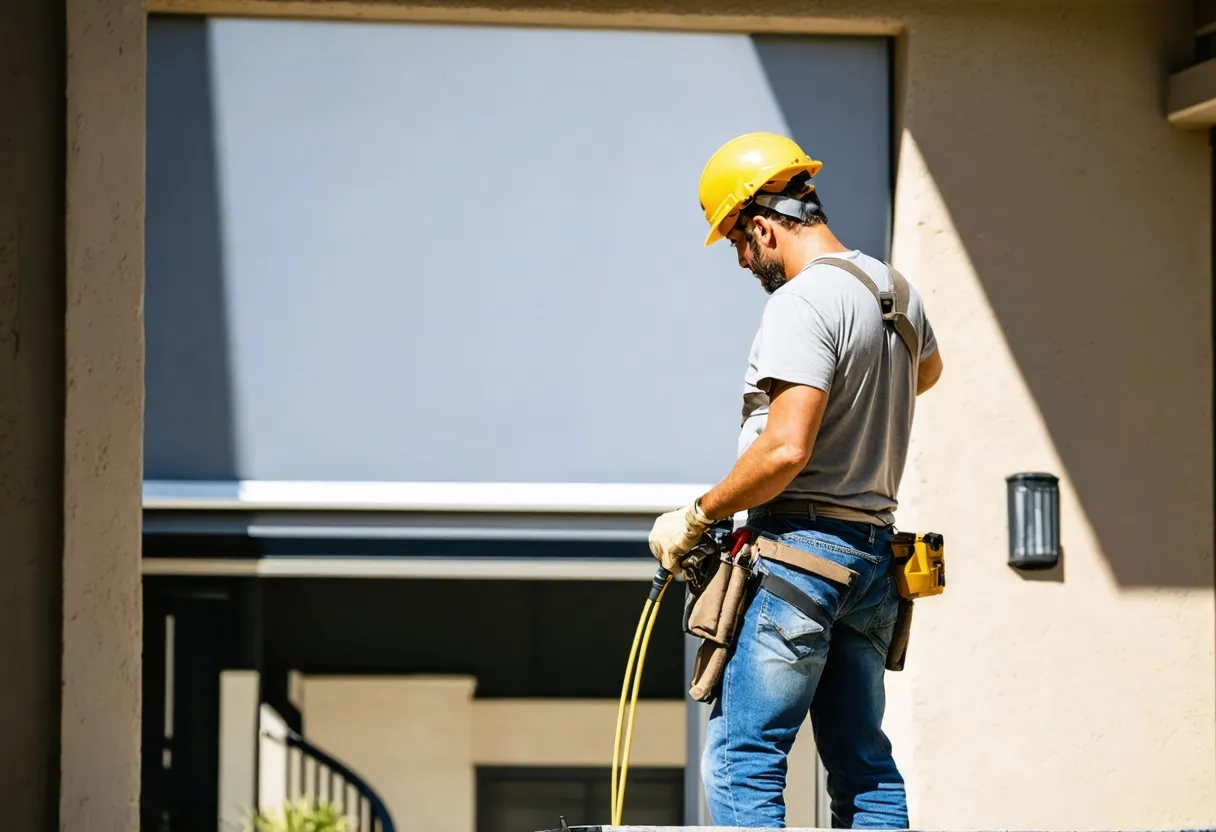
By early afternoon in July, a west-facing media room in Glendale doesn't need better speakers or a bigger screen — it needs to stop fighting the sun. Motorized shade and lighting control installation in Glendale, AZ is the piece of a home theater build that most out-of-state installers treat as an afterthought, when it's actually the reason a room feels like a real theater instead of a bright box with a TV in it. Getting it right here means designing shade fabric, motor selection, and lighting scenes around Sonoran Desert sun angles and stucco-and-tile construction, not dropping in a shading kit built for a mild-climate, drywall-frame house somewhere else.
This page covers how we approach that work specifically for Glendale homes across the 85301, 85302, 85303, and 85305 zip codes: what changes when you're mounting into stucco or block instead of drywall, what a full shade-and-lighting scope actually includes, how the installation unfolds room by room, what genuinely moves the price, and the questions worth asking before you commit to any installer doing structural mounting work on your home.
Why Glendale's Sun and Wall Construction Change the Engineering
Two things separate a Glendale installation from a generic one: the sun, and what's behind your walls.
Glendale sits in the Sonoran Desert, which means long stretches of intense, high-angle sun and glass that heats up fast, especially on west- and south-facing exposures. A theater or media room built around that kind of glass without a real shading plan either stays too bright to watch anything comfortably until evening, or gets closed off with a single blackout shade that never opens and leaves the room dim and flat all day. Neither is a good outcome, and both are what happens when shading is treated as a single generic product instead of a system tuned to the direction your windows actually face.
We plan shade positioning and lighting scenes around the real sun path each window sees rather than a one-size schedule. In practice that means separating daytime glare control from nighttime theater darkness instead of asking one shade to do both jobs — a sheer solar screen can knock down glare and heat during the day while a true blackout shade drops for movie time, with lighting scenes programmed to compensate so the room doesn't feel like a cave the moment the blackout shade closes. Fabric and hardware also have to be selected with UV exposure and heat-soaked motor housings in mind, since components rated for milder climates can fade, stiffen, or fail faster once they're living behind west-facing Arizona glass for years.
The other factor is construction. Most Glendale subdivisions are built with stucco exteriors, tile roofing, and block or stucco-finished interior walls rather than the drywall-over-stud framing most mainstream shade and lighting installers are trained on. Mounting a motorized shade bracket, running low-voltage wire to a lighting control panel, or reaching a keypad location through a stucco or block wall takes different anchoring hardware and a different routing approach than a standard drywall install — done wrong, it means brackets that pull loose after repeated cycles, visible surface-mounted conduit, or patch marks where an installer guessed wrong about what was behind the finish. We treat stucco and block mounting, tile-roof-aware wire routing to attic and exterior sensor locations, and in-wall pathway planning as the starting point for every Glendale project, not an exception we work around after the fact.
What a Full Glendale System Actually Includes
How a Glendale Installation Actually Unfolds
We walk the room or the whole house noting window orientation, existing wiring, and wall construction, then talk through whether you need full theater blackout, everyday glare control, or a whole-home lighting scene plan.
Each window is measured individually, fabric opacity is matched to how that specific room and window orientation is used, and motor type is chosen based on window size, weight, and power access.
Bracket locations, wiring pathways, and keypad placement are mapped around your stucco, block, or drywall construction before anything is drilled or fished.
Shades and lighting components are mounted with anchoring appropriate to the wall type, wired into the control system, and programmed into scenes, schedules, and any voice assistant you use.
Every shade is calibrated for smooth, quiet travel and every lighting scene is fine-tuned on-site with you in the room before we walk you through the app and any wall controls.
A Lifetime Warranty Built for Arizona Conditions, Not a Generic Term Length
Arizona heat is hard on motors, fabric, and mounting hardware in ways milder climates simply don't test. We back the work with a lifetime warranty and offer financing so a full shading and lighting upgrade doesn't have to happen in one lump payment. Details on coverage and terms live on our financing and warranty page — worth reading before comparing quotes, since a lower price with thin coverage often costs more once Arizona heat starts working on motors and fabric.
What Actually Drives the Price of a Glendale Shading and Lighting System
Every project is different, but the cost drivers are consistent and worth understanding before you compare quotes side by side.
The number and size of windows or openings is the starting point — more windows or larger openings mean more shades, more motors, and more labor hours. Shade type and fabric matter just as much: a solar screen fabric built for daytime glare control costs less than a true blackout fabric engineered for full home-theater darkness, and getting that distinction right matters more in a west-facing Glendale room than almost anywhere else in the house. Power source is another variable — battery or rechargeable motors are typically less invasive to install than hardwired motors, which need an electrician-grade wiring run through your specific wall type.
Mounting complexity is the factor most quotes get wrong when they're written over the phone instead of in person. Stucco, block, or tile-roof-adjacent mounting takes different hardware and more time than a standard drywall install, and a quote based on drywall assumptions changes the moment an installer is actually on-site in a Glendale home. Control system scope is the last major lever: a single remote-controlled shade in one room costs far less than a whole-home build with lighting scenes, voice integration, and multi-room scheduling, and integrating with an existing home automation or security platform adds programming time versus a standalone install.
We quote in tiers so you can see the real difference between a basic single-room shade package and a whole-home shading, lighting, and automation build, rather than a vague starting price that grows once someone is actually in your attic. The same Arizona-engineered approach — stucco- and tile-aware mounting, desert-sun-calibrated fabric, and tiered pricing with the same lifetime warranty — carries into nearby communities we also serve, including Peoria, Mesa, and Scottsdale, so a project spanning a primary Glendale home and a second Valley property can be scoped under one plan.
How to Vet an Installer Before They Touch Your Walls
Motorized Shade and Lighting Questions Glendale Homeowners Ask
With the right fabric, yes — true blackout shades are rated for near-total light exclusion, which is different from a standard solar screen. Because Glendale sun is so intense on west- and south-facing glass, opacity is checked against your specific window orientation rather than assuming any blackout-labeled fabric performs the same in every room.
In most cases, yes. Your existing platform, voice assistant, or hub is assessed during the consultation and new shades and lighting are integrated into it rather than forcing a separate app onto you. If your current system genuinely can't support that integration, that gets flagged before installation, not after.
That's built into the spec from the start. Motor housings, fabric, and mounting hardware are selected with desert heat and UV exposure in mind, since components rated for milder climates tend to fade, stiffen, or degrade faster when they're living behind hot west-facing glass or in attic space.
A single room with a few shades and basic lighting control is typically finished in a day. Whole-home projects with multiple rooms, full scene programming, and integration with voice control or an existing automation platform take longer and are scheduled across multiple visits based on scope.
That's what the lifetime warranty covers. Rather than a limited parts-only term that expires after a year or two, coverage is built around long-term system performance in Arizona conditions — full terms are on the financing and warranty page.
Yes, financing options are available so the cost can be spread out rather than paid all at once. It's worth asking about current plans, and about the military, first responder, and law enforcement discount, when you request your quote.
Get Your Free Quote
No obligation, no pressure — just a clear look at your options.
Ready to Plan Your Setup?
Get a clear, tiered quote built around your room and Glendale's climate.